
The fascination with watching gear mechanisms in operation is a surprisingly prevalent phenomenon, extending beyond the realm of engineers and technicians. While not universally true, a significant portion of the population exhibits a distinct appreciation, even enjoyment, when observing the intricate dance of meshing teeth transferring motion and force. This appeal stems from several interconnected factors rooted in human psychology, aesthetic appreciation, and an inherent curiosity about how things function.
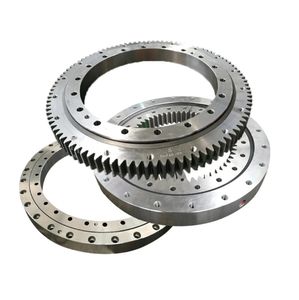
(do people like watching gear machines work?)
Psychologically, humans are drawn to predictable, rhythmic patterns and visible cause-and-effect relationships. Gear trains provide this in abundance. The synchronized rotation, the precise engagement and disengagement of teeth, and the clear transmission of motion from one shaft to another offer a satisfying sense of order and predictability. Observing a complex gear reduction system, where a rapidly spinning input results in a powerful, slow-turning output, visually demonstrates fundamental principles of mechanics – torque multiplication, speed reduction, and energy transfer – in an immediately understandable way. This visual confirmation of physical laws provides a deep, almost instinctive satisfaction. The rhythmic clicking or whirring sound often accompanying gear operation further enhances this sensory experience, creating a multisensory kinetic art form.
Aesthetically, well-designed gear systems possess an inherent beauty. The interplay of polished metal surfaces, the geometric perfection of involute tooth profiles meshing seamlessly, and the transformation of circular motion into controlled linear or rotational outputs elsewhere in the machine can be captivating. The complexity achieved through seemingly simple components – wheels with teeth – evokes admiration for the ingenuity of the design. Watching a planetary gearset reconfigure itself under load or observing the smooth power flow through a multi-stage transmission showcases mechanical elegance. For many, this transcends mere function; it becomes a visual spectacle, a ballet of precision engineering.
Furthermore, gear mechanisms often represent the “heart” or the “muscle” of a machine. Watching them work provides a tangible connection to the machine’s purpose and power. Seeing the gears turn within a vintage clock, a powerful industrial press, or even a bicycle derailleur demystifies the process. It answers the “how” question that naturally arises when encountering complex machinery. This transparency is inherently appealing, satisfying human curiosity and providing a sense of understanding. The visible effort – the slight deflection of shafts, the oil film glistening on teeth under load – reinforces the reality of the forces being managed, making the invisible forces of torque and power tangible.
It is important to acknowledge that this appreciation is not universal. Some individuals may find the sight mundane, noisy, or irrelevant to their interests. The level of fascination often correlates with the complexity, visibility, and context of the gear system. A simple gear pair in a household appliance might go unnoticed, while the exposed, massive gears driving a historic mill wheel or the intricate timing gears in a vintage car engine command attention and admiration. The context of craftsmanship, historical significance, or raw power significantly amplifies the appeal.

(do people like watching gear machines work?)
In conclusion, while individual preferences vary, a substantial number of people demonstrably enjoy watching gear machines work. This enjoyment arises from the deep-seated human attraction to rhythmic motion and visible causality, the inherent aesthetic appeal of precision mechanical interaction, and the satisfaction derived from visually understanding the fundamental principles of force and motion transmission. Gears, in their meshing and turning, provide a direct, unfiltered window into the applied physics that shape our engineered world, offering a spectacle that is both intellectually stimulating and viscerally pleasing. They transform abstract principles into a captivating mechanical reality.