
The fundamental question of what initiates and sustains the rotational motion driving gears within a machine lies at the heart of mechanical power transmission. Gears themselves are passive components; they do not generate motion autonomously. Instead, they rely entirely on an external source of rotational energy, meticulously transferred and often modified through a drivetrain, to perform their critical functions of transmitting power, altering speed and torque ratios, and changing the direction of rotation.
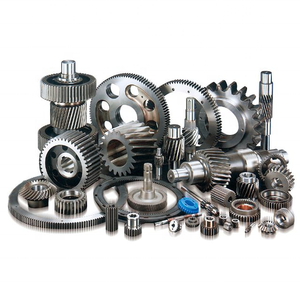
(what turns the gears in a machine)
The primary agent responsible for turning the gears is torque. Torque represents a rotational force, measured in Newton-meters (Nm) or pound-feet (lb-ft). This twisting force is applied to the input shaft of the gear system. The source generating this initial torque is termed the prime mover. The selection of prime mover depends heavily on the application’s specific requirements concerning power output, speed range, energy source availability, efficiency, and environmental constraints.
Common prime movers include:
1. Electric Motors: Ubiquitous in industrial machinery, automation, appliances, and electric vehicles. They convert electrical energy into mechanical rotational energy (torque). Motors offer precise speed control, high efficiency, reliability, and relatively clean operation. Types range from simple AC induction motors to complex servo and stepper motors for high-precision applications.
2. Internal Combustion Engines (ICEs): The dominant power source for automotive, marine, and many mobile applications. ICEs convert the chemical energy in fuel (gasoline, diesel, etc.) into mechanical torque via controlled combustion within cylinders, driving a rotating crankshaft. They provide high power density but generate emissions and require complex ancillary systems.
3. Hydraulic Motors: Utilize pressurized hydraulic fluid to generate torque. They excel in applications requiring very high starting torque, precise speed control under heavy and variable loads, compact size relative to power output, and inherent overload protection (fluid bypass). Common in construction equipment, heavy machinery, and aerospace systems.
4. Pneumatic Motors: Similar to hydraulic motors but use compressed air as the working fluid. They offer simplicity, explosion-proof operation (suitable for hazardous environments), and relatively low cost. However, they are generally less efficient and powerful than electric or hydraulic motors and are often used for lower-power tools and actuators.
5. Turbines: Convert the kinetic or thermal energy of a fluid (steam, gas, water, wind) into rotational mechanical energy. Steam turbines drive large generators in power plants, gas turbines power aircraft and some power stations, hydro turbines generate electricity from flowing water, and wind turbines harness wind energy.
The torque generated by the prime mover must be effectively transmitted to the input gear(s) of the machine’s gear train. This transmission rarely occurs directly. Intermediate components form the drivetrain or power transmission system, which may include:
Shafts: Solid or hollow cylindrical components that carry torque from the prime mover to the gearbox input and between gears within the system. They are supported by bearings to minimize friction and maintain alignment.
Couplings: Connect shafts, accommodating minor misalignments (angular, parallel, axial) while transmitting torque. Types range from rigid to highly flexible (jaw, disc, gear, elastomeric).
Belts and Pulleys / Chains and Sprockets: Provide a flexible means of transmitting power over longer distances or where electrical isolation is needed. They also offer a simple way to achieve speed reduction or increase between the prime mover and the gearbox input shaft. Belts rely on friction, chains on positive engagement.
Clutches and Brakes: Control the engagement and disengagement of torque transmission (clutches) or bring the system to a stop (brakes). Essential for controlling machine operation, starting, stopping, and safety.
Once torque is applied to the input shaft of the gear mechanism, the meshing teeth of the gears transmit this force. The interaction of the gear teeth converts the input torque and rotational speed into a different output torque and speed according to the gear ratio, defined by the number of teeth on the driving gear versus the driven gear. Gears mesh in pairs or complex trains, enabling significant speed reductions (increasing torque) or speed increases (decreasing torque), directional changes (e.g., via bevel gears), and the transfer of motion between non-parallel shafts (e.g., worm gears, hypoid gears).

(what turns the gears in a machine)
In conclusion, gears are set into motion by the application of torque. This torque originates from a prime mover – an electric motor, internal combustion engine, hydraulic motor, pneumatic motor, or turbine – chosen based on the application’s demands. This initial torque is then transmitted through a drivetrain comprising shafts, couplings, and potentially belts/chains, finally reaching the input gear of the transmission system. The fundamental physics of gear tooth engagement then dictates the transformation of this input torque and speed into the desired output characteristics that drive the machine’s functional components. Understanding this chain, from prime mover energy conversion through torque transmission to gear interaction, is essential for the effective design, analysis, and maintenance of any geared mechanical system.