
Fountain soda machines are complex electromechanical systems designed for precise mixing and dispensing of beverages, but their core dispensing mechanisms typically do not rely heavily on traditional gear trains. While gears are fundamental components in many mechanical devices, their role in modern fountain dispensers is minimal or entirely absent within the primary fluid handling pathways. The critical functions – syrup and water pumping, carbonation, cooling, and dispensing – are achieved through alternative means.

(are there any gears in a fountain soda machine)
The heart of syrup and concentrated beverage component delivery in most contemporary fountain machines is the peristaltic pump. This pump type utilizes rotating rollers or shoes that sequentially compress and release a flexible tube, creating a peristaltic wave that propels the liquid forward without the liquid contacting any internal pump mechanism besides the tube itself. This design offers significant advantages: it prevents contamination, allows easy cleaning by replacing the inexpensive tube, handles viscous syrups effectively, and provides precise volumetric control crucial for consistent drink ratios. Crucially, the motor driving the roller assembly typically connects directly or via a simple belt or direct drive, bypassing the need for reduction gears.
Water delivery for mixing and carbonation primarily relies on municipal water pressure. Solenoid valves, actuated electronically, control the flow of plain or carbonated water. These valves use electromagnetic coils to open and close orifices directly; no gearing is involved in their core valving operation. Carbon dioxide (CO2) gas storage and delivery operate under high pressure. Pressure reduction is managed by a regulator, which fundamentally relies on a diaphragm and spring mechanism balancing input pressure against a set output pressure. Fine adjustments might involve a threaded adjustment screw, but this is a simple linear motion, not a gear train. The gas flow itself is controlled by solenoid valves similar to the water valves.
Refrigeration is essential for cooling the water, syrup, and carbonated mixture. While the compressor within the refrigeration system could potentially utilize gears in specific designs (like some older reciprocating compressors), the dominant technology in modern fountain machines is the scroll compressor. Scroll compressors operate using two interleaved spiral scrolls – one fixed, one orbiting – to compress refrigerant. This orbiting motion is typically driven by an eccentric on the motor shaft or via a simple Oldham coupling, not through a gear train. Smaller machines might use thermoelectric (Peltier) cooling, which involves no moving parts at all.
The dispensing process itself involves activating the appropriate solenoid valves (syrup, carbonated water, plain water for non-carbonated drinks) simultaneously. The fluids mix externally in the nozzle. The valve actuators are electromagnetic, requiring no gears. Ice dispensing, if integrated, often uses an auger system driven by a motor, potentially involving a simple gear reduction between the motor and the auger shaft. However, this is an auxiliary function, not core to the beverage mixing and dispensing mechanism.
Historically, some very early or specialized fountain equipment might have employed gear pumps for syrup or positive displacement mechanisms involving gears. However, these designs have been largely superseded by peristaltic pumps due to the hygiene, maintenance, and precision advantages mentioned. Gear pumps introduce complexity, potential contamination points, and cleaning challenges that are undesirable in a food service environment.
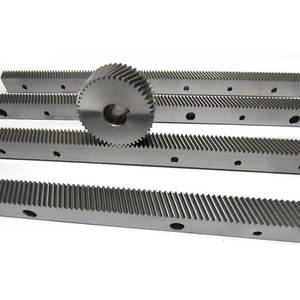
(are there any gears in a fountain soda machine)
In conclusion, while gears are ubiquitous in machinery, their presence within the essential fluid handling and dispensing systems of a modern fountain soda machine is negligible or non-existent. The critical tasks of pumping viscous syrup, controlling water and gas flow, mixing components, and dispensing the final product are accomplished using peristaltic pumps, solenoid valves, diaphragm regulators, and direct-drive or simple coupling mechanisms in refrigeration. The design prioritizes hygiene, reliability, precise ratio control, and ease of maintenance, goals better served by these alternative technologies than by traditional gear systems. Any potential gear use would be confined to auxiliary functions like ice dispensing or in specific, outdated compressor designs, not the core beverage dispensing pathway.