
Gears are fundamental components in countless mechanical systems, transmitting motion and torque efficiently and reliably. Producing these precision components requires specialized machinery capable of achieving the complex geometry, tight tolerances, and required surface finishes. Several key machine tools are employed in modern gear manufacturing, each suited to specific gear types, production volumes, and quality requirements.
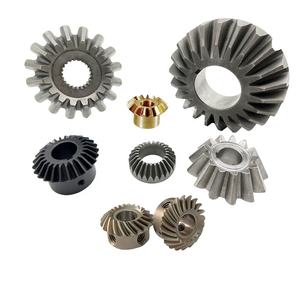
(what machines are used to make gears)
Gear Hobbing Machines are arguably the most versatile and widely used for producing external spur and helical gears. The process involves a rotating cutting tool called a hob, which resembles a worm gear with gashes forming cutting edges. The hob and the gear blank rotate in a precisely synchronized motion, a continuous generating process that progressively cuts the gear teeth into the blank. Modern CNC hobbing machines offer high productivity, excellent accuracy for a broad range of sizes, and flexibility for various helix angles. They are the workhorse for medium to high-volume production of automotive, industrial, and aerospace gears.
For internal gears, splines, or gears very close to shoulders, Gear Shaping is often the preferred method. A gear shaping machine utilizes a reciprocating cutter, shaped like the tooth space of a mating gear, which rotates in timed relation with the gear blank. As the cutter reciprocates vertically, it generates the tooth profile through an indexing motion. While generally slower than hobbing, shaping excels at producing internal geometries and cluster gears where hobbing tool access is impossible. CNC gear shapers provide high precision for complex profiles.
Gear Milling Machines, specifically utilizing form-milling cutters, are primarily used for low-volume production, prototyping, or very large gears. A form cutter is ground to the exact shape of the tooth space. The cutter rotates, and the gear blank is indexed after each tooth space is milled. While flexible and capable of producing high-quality gears, including straight bevel gears, the indexing process makes it significantly slower than generating processes like hobbing or shaping. It remains valuable for unique or oversized gears where dedicated tooling for faster methods is impractical.
Achieving the highest levels of precision, surface finish, and hardness requires Gear Grinding Machines. These are essential for finishing hardened gears used in demanding applications like wind turbines, precision gearboxes, and automotive transmissions. Grinding employs rotating abrasive wheels to remove material from the gear teeth. Common methods include profile grinding, where a formed wheel grinds the tooth profile directly, and generating grinding, where a disc-shaped wheel traverses the tooth flank while synchronized with the workpiece rotation. CNC gear grinders offer micron-level accuracy and exceptional surface integrity but are slower and more expensive than cutting processes.
Gear Honing Machines provide a finishing process primarily for hardened gears after grinding or as a final finishing step for shaved or ground gears. Honing uses abrasive stones mounted on a honing tool shaped like a gear. The tool and workpiece mesh under pressure while oscillating axially. This process removes minute amounts of material, primarily to correct minor distortions from heat treatment, improve surface finish, reduce noise, and correct tooth flank micro-geometry. It is a relatively quick finishing operation that enhances gear performance and longevity.
For producing internal splines or keyways efficiently, especially in high volumes, Gear Broaching Machines are employed. Broaching uses a multi-toothed tool (broach) with successively larger cutting teeth. The broach is pulled or pushed linearly through or across the gear blank, with each tooth removing a small amount of material until the final shape is achieved in a single pass. While highly productive for specific geometries, broaching requires dedicated tooling for each unique spline or gear form, making it economical primarily for large batch sizes.
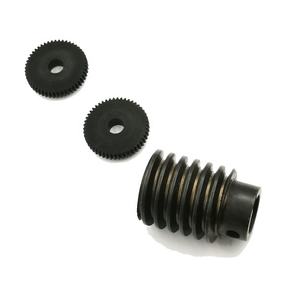
(what machines are used to make gears)
The selection of the appropriate machine tool depends critically on factors such as the gear type (spur, helical, bevel, internal), module or diametral pitch, required accuracy, material hardness, production volume, and cost constraints. Modern CNC versions of all these machines dominate the industry, offering unparalleled precision, repeatability, and flexibility. Gear hobbing and shaping remain the primary methods for tooth generation, while grinding and honing are indispensable for achieving the ultra-high precision and surface quality demanded by advanced applications. This suite of specialized machinery forms the backbone of reliable gear production across diverse industrial sectors.